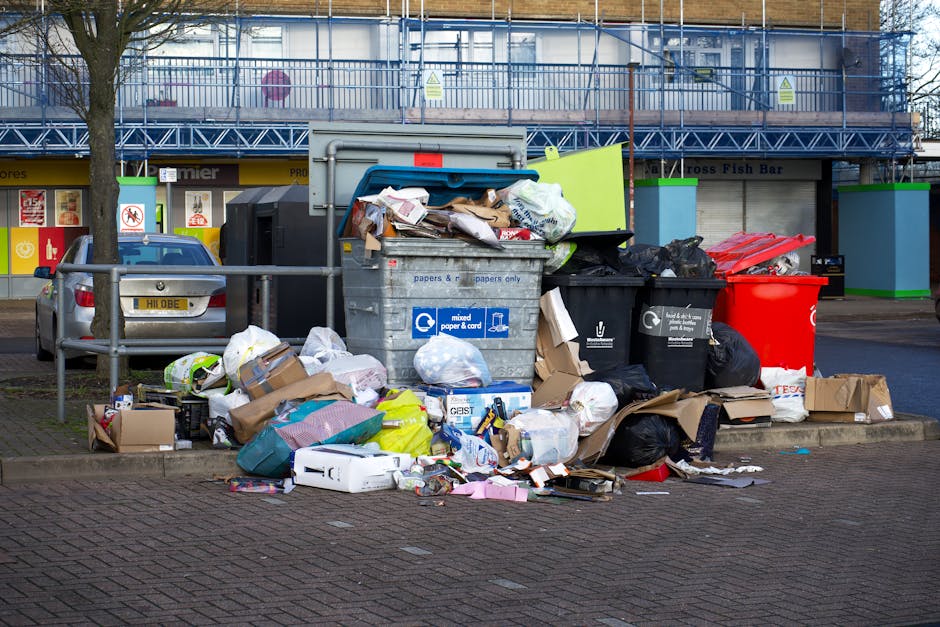
Ickenham Village rubbish removal guide for UB10 homes
If you live in UB10, rubbish has a funny way of building up at exactly the wrong time. One weekend it is a broken wardrobe in the hallway, a few garden sacks by the shed, and a stack of flat-pack boxes. Then suddenly the place feels cramped, dusty, and a bit more chaotic than it should. This Ickenham Village rubbish removal guide for UB10 homes is here to make the process clearer, calmer, and far less fiddly.
Whether you are clearing a loft, refreshing the garden, tackling a kitchen rip-out, or just getting rid of the stuff that has quietly gathered in corners for months, there are several good ways to do it. The trick is choosing the right one for your property, the type of waste, and how quickly you need it gone. Let's face it, nobody wants to spend a sunny Saturday with a van full of old bits and nowhere legal or sensible to take them.
This guide walks through the main rubbish removal options for UB10 homes, how they work, where they make sense, what to avoid, and how to plan a job without creating extra hassle. If you want a fuller look at services for domestic customers, you may also find domestic skip hire useful as a comparison point, especially if you are weighing up a bigger clear-out.
Table of Contents
- Why rubbish removal matters in Ickenham Village
- How rubbish removal works for UB10 homes
- Key benefits and practical advantages
- Who this is for and when it makes sense
- Step-by-step guidance
- Expert tips for better results
- Common mistakes to avoid
- Tools, resources and recommendations
- Law, compliance and best practice
- Options, methods and comparison table
- Case study or real-world example
- Practical checklist
- Conclusion
- Frequently asked questions
Why Ickenham Village rubbish removal guide for UB10 homes Matters
UB10 homes cover a mix of everyday situations: family houses with overflowing garages, terrace properties with narrow access, flats where storage is limited, and period homes where renovation debris can appear faster than expected. In that setting, rubbish removal is not just about "getting rid of stuff". It affects safety, space, appearance, and how smoothly a project moves along.
When waste hangs around, it tends to attract more waste. A dismantled cabinet becomes a pile of timber. A pile of timber becomes a trip hazard. A trip hazard becomes a nuisance, and then, well, you know the rest. Clearing waste quickly can make the whole house feel more workable again. You will notice it especially if you are trying to live through a project rather than just visit the property between deliveries.
There is also the local access factor. Some Ickenham Village roads and driveways are easier than others, and not every property has space for large vehicle manoeuvring or long-term skips on the front. That is why having a proper guide matters: the best waste solution is often the one that fits the property as much as the waste itself.
For larger domestic clear-outs, it helps to understand where rubbish removal sits alongside other services such as house clearance, garage and loft clearance, and garden waste removal. Each solves a slightly different problem. The overlap is useful, but the details matter.
Expert summary: For UB10 homes, the smartest rubbish removal choice is usually the one that matches access, waste type, and timing. Do not start with the vehicle. Start with the waste.
How Ickenham Village rubbish removal guide for UB10 homes Works
In practical terms, rubbish removal means collecting unwanted material from your property and taking it away for sorting, recycling, reuse, or disposal. The service can be simple or surprisingly involved depending on what you are throwing out. A few black bags from a declutter is one thing. A bathroom rip-out, old appliances, and broken fencing is another story entirely.
Most jobs follow a similar pattern:
- You identify the type and amount of waste.
- You choose the right service method.
- You arrange collection or hire.
- The waste is loaded safely.
- The material is transported for proper processing.
That sounds straightforward, and often it is. But the details decide whether the job feels smooth or slightly annoying. For example, a driveway with easy access may suit a skip or wait-and-load arrangement. A property with limited space might be better served by a same-day collection, a man and van style service, or even a grab lorry if the material is bulky. If the job involves heavy rubble, soil, or construction waste, a more robust option may be better than a general household clearance.
There are also waste-type considerations. Some items can go together. Some really should not. Fridges, mattresses, sofas, confidential paperwork, and potentially hazardous items each have different handling needs. If you are unsure what is acceptable, the page on what can go in a skip is a practical place to start, even if you are leaning toward a mixed household clearance rather than a skip.
In some situations, a skip is still the simplest answer. In others, it is overkill. That is why comparing methods before booking saves time and money. It also reduces the classic "we should have chosen a different option" moment halfway through the job.
Key Benefits and Practical Advantages
Good rubbish removal is not glamorous, but it is one of those services that makes a house feel instantly more manageable. The benefits are practical, not theoretical.
More usable space
Clearing waste from a garage, loft, garden, or spare room gives you room to move again. That alone can change how a home feels. It is easier to store tools, finish a project, or just breathe without stepping around clutter.
Safer movement around the property
Loose waste is a nuisance in hallways, driveways, and gardens. Bags, offcuts, glass, and damaged furniture all create avoidable risks. Prompt removal reduces trips, sharp edges, and blocked access. A simple clear-out can make a big difference, especially in homes with children or older residents.
Less stress during projects
Renovation and decluttering jobs usually go better when the waste plan is sorted early. Nobody enjoys seeing a pile of debris grow each day while the rest of the house becomes harder to live in. A planned collection helps keep momentum.
Better recycling outcomes
Where waste is sorted properly, more of it can be recycled or recovered. That is good for the environment, and frankly it is just a more sensible way to handle household waste. If sustainability matters to you, have a look at recycling and sustainability to understand how responsible disposal fits into the bigger picture.
Cleaner presentation for sale or let
Homes being prepared for viewing, sale, or end-of-tenancy handover often look far better once old waste and bulky items are removed. It is one of those small changes that quietly improves the whole impression. Not magic, but close enough on a tired Friday afternoon.
Who This Is For and When It Makes Sense
This guide is for UB10 homeowners, tenants, landlords, and property managers who need a clear plan for waste removal without wasting a week overthinking it. More specifically, it helps if you are dealing with any of the following:
- spring clean or seasonal declutter jobs
- loft, garage, shed, or understairs clear-outs
- garden refreshes with branches, soil, and old fencing
- kitchen, bathroom, or bedroom refurbishments
- move-out clearances and end-of-tenancy waste
- bulky furniture disposal
- mixed household and light DIY waste
- small renovation projects that produce more debris than expected
It also makes sense for people who simply do not want to spend hours trying to fit rubbish into a car, queue at a tip, or coordinate multiple trips. If you have ever stood in a driveway with a mattress, a broken wardrobe, and a slightly questionable stack of bin bags, you already know the feeling.
For busy households, a service-led approach is often best. If the waste is mostly domestic and fairly mixed, rubbish removal can be the most direct option. If it is a larger household clearance, the broader house clearance page may fit better. If the issue is one-off furniture, then dedicated options such as mattress and sofa disposal or fridge and appliance removal may be the cleanest route.
Step-by-Step Guidance
If you want a smooth job, do not start with collection day. Start with what is actually going out. That simple shift saves a lot of confusion.
- Sort the waste by type. Put garden waste, household rubbish, wood, metal, appliances, and hazardous items into rough groups.
- Estimate the volume. You do not need forensic precision. Just ask: is this a couple of bulky items, a small room, or a full clearance?
- Check access. Measure gates, note steep driveways, low branches, parking restrictions, and whether a vehicle can stop safely.
- Separate restricted materials. Paint, chemicals, gas canisters, asbestos, and similar items need special handling.
- Choose the right service. Skip hire, wait-and-load, man and van, or grab hire each suit different kinds of jobs.
- Prepare the space. Move cars, unlock gates, and make sure the waste is reasonably accessible.
- Load efficiently and safely. Heavy items first, lighter items on top, and nothing sticking out where it should not.
- Confirm disposal arrangements. Responsible contractors should sort, recycle, or dispose of waste appropriately.
A small practical note: if the waste is sitting in the back garden and the access is awkward, it may be worth looking at grab hire services or grab lorry hire rather than forcing a collection method that does not suit the site. In the real world, that usually makes the day go much better.
Expert Tips for Better Results
A few habits can make rubbish removal quicker, safer, and less expensive. Nothing dramatic. Just the kind of practical choices that save bother later.
Book based on the waste, not the calendar
If your project is likely to produce more waste than expected, plan for a bit of headroom. People often underestimate how much a room full of "things we might keep" turns into once sorting begins. Funny how that works.
Choose the method that fits access
In tighter streets or homes with limited driveway space, methods that reduce on-site time can be more convenient. A wait and load skip hire option may suit properties where a long stationary container is not practical. For some jobs, a same-day skip hire request can help when time is tight. Not every job needs it, but when it does, it really does.
Keep restricted items separate from the start
Hazardous waste should never be casually mixed in with general rubbish. If you discover paint tins, solvents, or similar materials halfway through a clear-out, pause and check the right route. The page on hazardous waste disposal is worth reviewing if you are dealing with anything uncertain.
Think about privacy too
Old paperwork, business files from home, or documents with personal details should not just be thrown into mixed waste. If shredding is needed, confidential shredding is the sensible route. It is one of those small details that people often forget until they are already halfway through a box of old files.
Ask about recycling approach
A responsible service should not treat every item as if it were the same thing. Mixed waste can often be separated for better recovery. When in doubt, ask how the load will be processed and what happens to recyclable material. Good operators are usually happy to explain.
One more thing. If the job is part of a bigger refurbishment, it may help to match waste removal to the project stage. Builders' debris comes in waves, not neatly in one heap. Planning for that makes life easier.
Common Mistakes to Avoid
Most problems with rubbish removal are avoidable. That is the good news. The bad news is that the mistakes are often the simple ones.
- Underestimating volume. A "small pile" can grow into a much bigger one once broken down.
- Mixing prohibited items. This creates safety and compliance issues, and sometimes the whole load needs extra sorting.
- Ignoring access constraints. Narrow lanes, parked cars, and low clearance can delay a collection.
- Forgetting about permits. If a skip must be placed on public land, you may need the appropriate arrangement in advance. See skip hire permits and skip permits for more context.
- Leaving sorting until the last minute. It is much easier to separate items before they are all in one heap.
- Choosing the wrong service type. Forcing the wrong method usually costs more in time and hassle.
- Not checking disposal expectations. Responsible waste handling should be clear, not vague.
There is also a surprisingly common one: people clear the room, then realise they have nowhere to stack the waste while waiting for collection. A tiny thing, but it catches people out all the time.
Tools, Resources and Recommendations
You do not need fancy equipment for a household rubbish removal job, but a few simple tools make the process much easier.
- heavy-duty gloves
- strong refuse sacks
- tape or marker labels for sorting
- trolley or sack truck for bulky items
- dust sheets for dusty loft or garage clears
- basic measuring tape for access and volume checks
- torch or headlamp for lofts, sheds, and under-stair spaces
For deciding which disposal method to use, these service pages can help you match the job to the right approach:
- skip hire for general, flexible waste removal
- skip sizes and prices if you need help estimating capacity
- man and van for smaller or more varied loads
- wait and load skip hire for quick turnaround jobs
- enclosed and lockable skip hire where security or contained waste matters
If your job is more about garden growth than general household clutter, garden waste removal is often the neatest fit. For office paperwork or business-related clear-outs done from home, office clearance can also be relevant. A lot depends on what is actually leaving the property.
Law, Compliance and Best Practice
Waste removal in the UK is not something to treat casually. Even for domestic jobs, good practice matters. You want waste to go where it is supposed to go, be handled safely, and not create a problem for the homeowner later.
For householders, the key point is simple: use a service that handles waste responsibly and avoid handing waste to anyone who cannot explain where it goes. That is not being difficult. That is just sensible. If you are choosing between options, look for clear information about disposal, recycling, insurance, and safety. The pages on insurance and safety and health and safety policy are useful for understanding the standards a professional operator should take seriously.
Public-road skip placement is another area where people get caught out. If a skip needs to sit on a road, pavement, or other public space, there may be permit requirements. Rules vary by location, so it is wise to check in advance rather than assuming a quick drop-off is fine. Better to ask early than shuffle a skip two days later. Nobody enjoys that call.
Some waste streams need extra care. Electrical appliances, refrigeration units, furniture with upholstery, and anything potentially hazardous should be handled using the right process. This is where specialist services, such as appliance removal or dedicated disposal routes, are more than just convenient. They help keep the whole job compliant and straightforward.
Options, Methods, or Comparison Table
Here is a simple comparison of the most common rubbish removal methods for UB10 homes. It is not about finding the "best" one in theory. It is about matching the method to the job in front of you.
| Method | Best for | Strengths | Watch-outs |
|---|---|---|---|
| Rubbish removal | General household clutter, mixed waste, bulky items | Convenient, flexible, practical for homes | Needs clear sorting for restricted items |
| Skip hire | Medium to larger clear-outs, refurbishment waste | Flexible loading over time, useful for ongoing jobs | Needs space and may need permits |
| Wait and load | Short, access-sensitive jobs | Fast, avoids long on-street placement | Works best when waste is ready to go |
| Man and van | Smaller loads, one-off pickups | Personal, adaptable, simple | May be less ideal for very bulky or heavy debris |
| Grab hire | Large loose waste, soil, rubble, garden material | Good reach, fast loading, useful for awkward access | Needs enough space for vehicle access |
If you are not sure which route to take, a comparison of waste volume and access is usually the fastest way to decide. In many UB10 homes, the question is not "which option is cheapest?" but "which one is actually least disruptive?" There is a difference.
Case Study or Real-World Example
Here is a realistic example based on the kind of job many Ickenham Village households face. A family in UB10 decided to clear the garage after years of gradually piling in old toys, broken shelving, paint tins, spare tiles, and a disused treadmill that had become a glorified clothes horse. You know the type.
At first, they thought a single carload would do it. Once they started sorting, the waste turned out to be a mix of bulky household items, general clutter, and some heavier leftover DIY material. The garage access was okay, but the driveway was tight and they did not want a skip sitting out front for days. After a quick assessment, they chose a more flexible collection approach rather than forcing the job into a one-size-fits-all plan.
The result was simple: the garage was emptied in one visit, the load was handled properly, and the family got the space back without turning the weekend into a disposal marathon. The real win was not just the cleared floor. It was the feeling that the house had become manageable again. Sometimes that matters more than people admit.
That kind of job is exactly why local rubbish removal guidance is useful. A tidy plan turns a stressful chore into a normal, finishable task. And honestly, that is what most people want.
Practical Checklist
Use this before you book or begin a rubbish removal job in UB10.
- Identify the main waste types in the load
- Estimate whether it is a small, medium, or large job
- Check whether any items need specialist disposal
- Measure access points such as gates, driveways, and paths
- Decide if the waste needs to leave quickly or can wait
- Separate recyclable, reusable, and restricted material
- Confirm whether a permit could be needed for on-street placement
- Prepare the waste so collection is fast and safe
- Review service pages that match your project type
- Keep documents and confidential material out of general waste
If you are juggling a renovation, a loft clear-out, and a garden refresh all at once, pause and break the job into stages. It sounds obvious, but it helps. A lot.
Get a free quote today and see how much you can save.
Conclusion
The best rubbish removal approach for Ickenham Village homes in UB10 is the one that fits the property, the waste, and your timing without creating extra work. For some households, that means a straightforward collection. For others, it means skip hire, wait-and-load, or a specialist service for bulky or awkward items. The right choice is usually the one that feels calmest on the day, not the one that looks neatest on paper.
If you are planning a clear-out, start with the waste type, then look at access, and only then choose the method. That order saves a surprising amount of hassle. And if the job feels bigger than expected, that is normal. Most do. The good news is that with a bit of planning, it is all very manageable.
For more about the company behind these services, you can review the about us page, or if you are ready to organise the next step, use book online. A tidy home always feels lighter. Bit by bit, that makes a difference.
Frequently Asked Questions
What is the best rubbish removal option for a UB10 home?
It depends on the type and volume of waste, plus how easy the property is to access. For mixed household waste and bulky items, rubbish removal or man and van style collection is often practical. For larger ongoing projects, skip hire may be better.
Do I need a skip permit in Ickenham Village?
You may need a permit if a skip is placed on a public road or other public space. If the skip stays fully on private land, a permit may not be required. It is always worth checking early so there are no last-minute surprises.
What items should not go in general rubbish removal?
Hazardous items, certain chemicals, gas canisters, and some electrical waste need special handling. If you are unsure about any item, separate it before the collection and ask for guidance rather than mixing it in.
Is rubbish removal better than skip hire for small clear-outs?
Often, yes. For smaller jobs, rubbish removal can be quicker and less disruptive because you are not dealing with a skip sitting on the property. If you have a steady stream of waste over several days, a skip may still be more practical.
Can I include furniture in a rubbish removal collection?
Usually, yes, but it depends on the item and the service. Sofas, mattresses, wardrobes, and similar bulky pieces can often be collected, though dedicated disposal options may be better for certain items.
How do I know if I need grab hire instead?
If the waste is loose, bulky, heavy, or spread across a garden or rear access area, grab hire can be a very useful choice. It is especially handy where manual loading would take too long or access is awkward.
What is the difference between house clearance and rubbish removal?
House clearance usually covers a broader, more complete removal of household contents. Rubbish removal is often better for mixed waste, selected items, or smaller clear-outs. There is some overlap, but the scale is different.
Can rubbish removal be arranged on short notice?
Sometimes, yes. If you need speed, same-day or next-day arrangements may be possible depending on availability and the job type. The key is being clear about what needs removing, so the right vehicle and team can be planned.
How should I prepare waste before collection?
Sort it into rough categories, keep restricted items separate, and make sure the waste is accessible. If possible, move cars or obstacles before the crew arrives. A bit of prep makes the whole thing go much faster.
What happens to the rubbish after collection?
Responsible waste should be taken for sorting, recycling, recovery, or disposal according to the material type. Good operators do not simply take it away and leave the process vague. Transparency here matters.
Is confidential shredding relevant for home clear-outs?
Yes, especially if you are clearing old paperwork, financial documents, or storage boxes with personal information. It is a simple way to avoid unnecessary privacy risks during a house clear-out.
How do I choose between wait and load and a skip?
Choose wait and load if you need a fast collection and do not want a skip left on-site. Choose a skip if you have waste coming out over time or need a more flexible loading window. The better option depends on your space and pace, not just the waste itself.